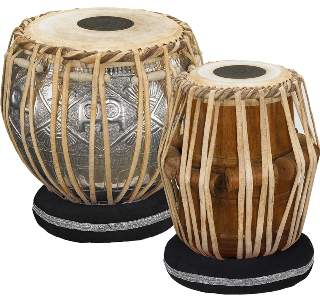
Tabla - A Tabla is a pair of hand drums from the Indian subcontinent. Since the 18th century, it has been the principal percussion instrument in Hindustani classical music, where it may be played solo, as an accompaniment with other instruments and vocals, or as a part of larger ensembles. The Tabla consists of 2 small drums of slightly different sizes and shapes. Each drum is made of hollowed-out wood, clay, or metal. The smaller drum (dayan/tabla) is used for creating treble and tonal sounds, while the primary function of the larger drum (baya/dagga) is for producing bass. They are laced with hoops, thongs, and wooden dowels on its sides; the dowels and hoops are used to tighten the tension of the membranes for tuning the drums.
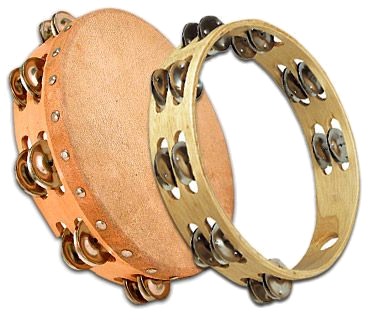
Tambourine - The Tambourine is a musical instrument in the percussion family consisting of a frame, often of wood or plastic, with pairs of small metal jingles, called "zills". Classically the term Tambourine denotes an instrument with a drumhead, though some variants may not have a head. Tambourines are often used with regular percussion sets. They can be mounted on a stand as part of a drum kit and played with drum sticks or they can be held in the hand and played by tapping, hitting, or shaking the instrument. Tambourines come in many shapes with the most common being circular and is used in many forms of music.
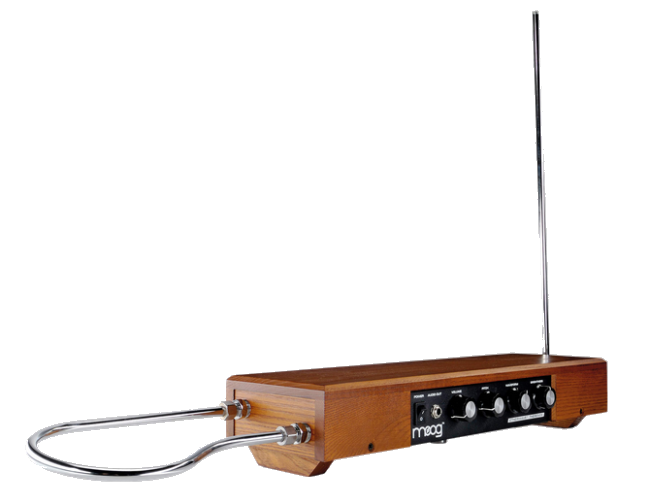
Theremin - The Theremin was originally known as the Etherphone, Thereminophone or Termenvox/Thereminvox, is an electronic musical instrument controlled without physical contact by the performer (who is known as a thereminist). It is named after its inventor, Leon Theremin, who patented the device in 1928. The instrument's controlling section usually consists of 2 metal antennas that function not as radio antennas but rather as position sensors. Each antenna forms 1/2 of a capacitor with each of the thereminist's hands as the other half of the capacitor. These antennas capacitively sense the relative position of the hands and control oscillators for frequency with one hand and volume with the other. The electric signals from the theremin are amplified and sent to a loudspeaker. The sound is often associated with eerie situations.
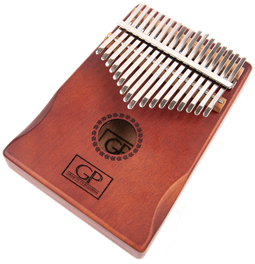
Thumb piano - See Akogo, also known as the Thumb Piano.
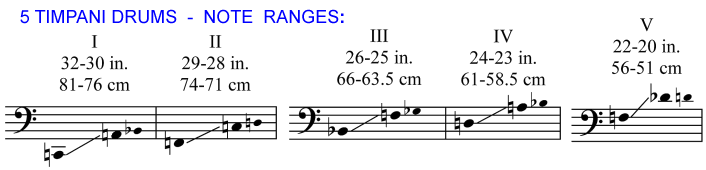
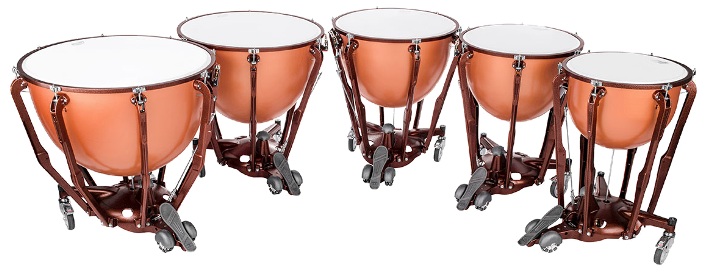
Timpani - The Timpani or Kettle Drums are musical instruments in the percussion family. A type of drum categorised as a hemispherical drum, they consist of a membrane called a head stretched over a large bowl traditionally made of copper. Thus Timpani are an example of Kettledrums, also known as vessel drums and semispherical drums, whose body is similar to a section of a sphere whose cut conforms the head. Most modern timpani are pedal timpani and can be tuned quickly and accurately to specific pitches by skilled players through the use of a movable foot-pedal. They are played by striking the head with a specialized beater called a timpani stick or timpani mallet. Timpani evolved from military drums to become a staple of the classical orchestra by the last third of the 18th century. Today, they are used in many types of ensembles, including concert bands, marching bands, orchestras, and even in some rock bands.
Tin Whistle - See Penny Whistle for more info.

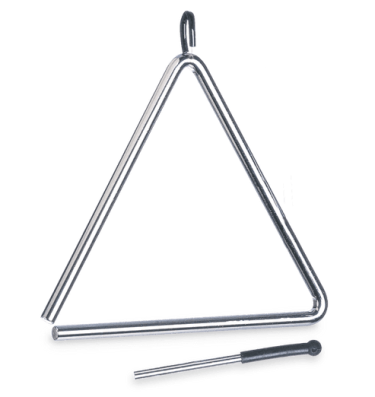
Triangle - The Triangle or Musical Triangle, is a musical instrument in the percussion family and classified as an idiophone. Triangles are made from a variety of metals including aluminum, beryllium copper, brass, bronze, iron, and steel. The metal is bent into a triangular shape with one open end. The instrument is usually held by a loop of some form of thread or wire at the top curve to enable the triangle to vibrate, and it is struck with a metal rod called a "beater". The Triangle theoretically has indefinite pitch and produces a plurality of overtones when struck with an appropriate beater.
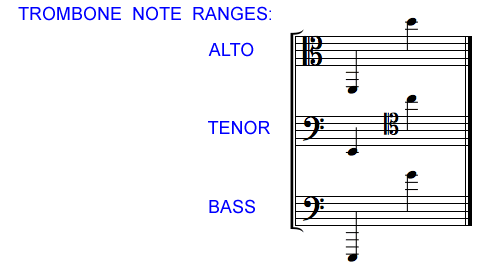
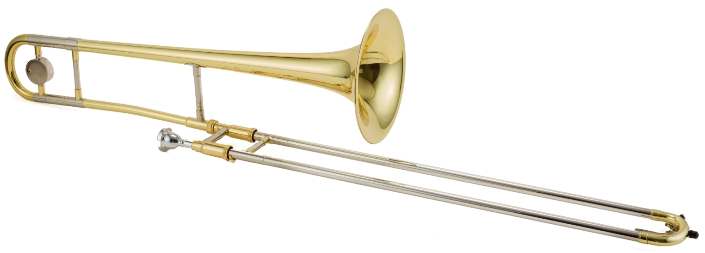
Trombone - The Trombone is a musical instrument in the brass family. As with all brass instruments, sound is produced when the player's lips vibrate inside a mouthpiece, causing the air column inside the instrument to vibrate. Nearly all Trombones use a telescoping slide mechanism to alter the pitch instead of the valves used by other brass instruments.
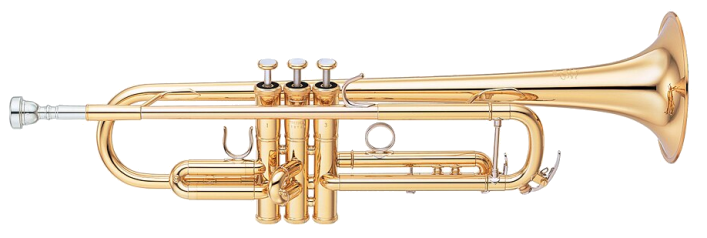
Trumpet - The Trumpet is a brass instrument commonly used in classical and jazz ensembles. The Trumpet group ranges from the piccolo trumpet—with the highest register in the brass family—to the bass trumpet, pitched one octave below the standard Bb or C trumpet. Sound is produced by vibrating the lips in a mouthpiece, which starts a standing wave in the air column of the instrument. Since the late 15th century, Trumpets have primarily been constructed of brass tubing, usually bent twice into a rounded rectangular shape. There are many distinct types of Trumpet. The most common is a transposing instrument pitched in Bb with a tubing length of about 1.48 m (4 ft 10 in).

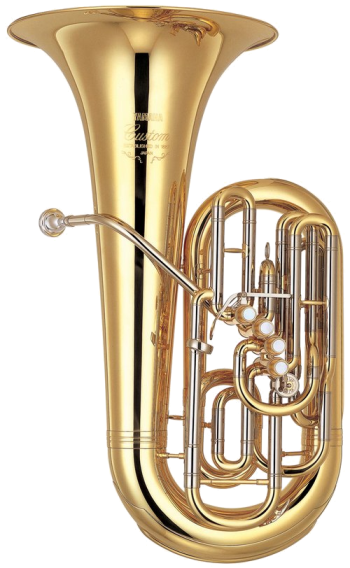
Tuba - The Tuba is a large brass instrument in the bass-to-contrabass range with a wide conical bore. It usually has 4 or 5 valves, although some models have 3 and some have 6. As with any brass instrument, sound is produced with a lip vibration or "buzz" in the mouthpiece. A person who plays the Tuba is called a Tubist or Tubaist or simply a Tuba player.

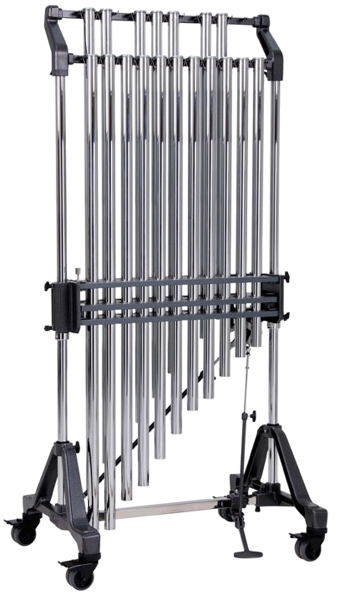
Tubular Bells - Tubular Bells (also known as Chimes) are musical instruments in the percussion family. Their sound resembles that of church bells, carillons, or a bell tower. The original Tubular Bells were made to duplicate the sound of church bells within an ensemble. Each bell is a metal tube, 30–38 mm (1 1/4 – 1 1/2 inches) in diameter, tuned by altering its length. Tubular Bells are usually struck on the top edges of the tubes with a rawhide or plastic-headed hammer. A sustain pedal may be attached to the instrument to allow damping and un-damping of all the bells at once. Very loud high-pitched overtones can be produced by vibrating the bottoms of the tubes with a Violin Bow.

|





