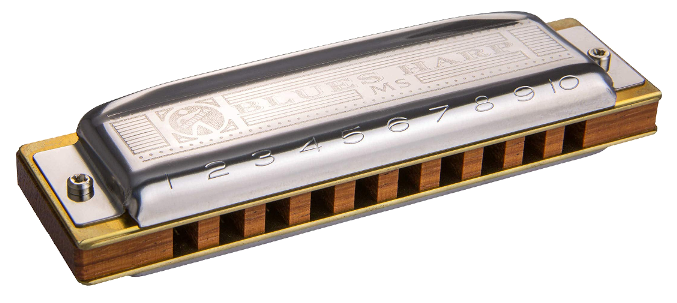
Harmonica - The Harmonica, also known as a French harp or Mouth Organ, is a free reed wind instrument used worldwide in many musical genres, notably in Blues, American Folk music, classical music, jazz, Country and Rock. The many types of harmonica include diatonic, chromatic, tremolo, octave, orchestral, and bass versions. The harmonica is played by using the lips and tongue to direct air into or out of one (or more) holes along a mouthpiece (which covers one edge of the harmonica for most of its length). Behind each hole is a chamber containing at least one reed with Reeds tuned to individual pitches. The most common type of harmonica is a diatonic Richter-tuned instrument with ten air passages and twenty reeds, often called a blues harp. The harmonica reed is a flat, elongated spring typically made of brass, stainless steel, or bronze, which is secured at one end over a slot that serves as an airway. When the free end is made to vibrate by the player's air, the reed alternately blocks and unblocks the airway to produce sound.
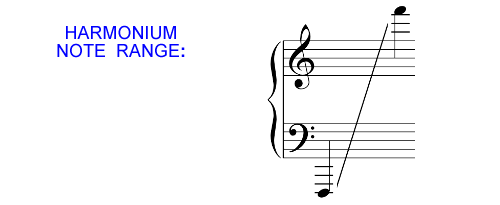
Harmonium - The harmonium is asmall, portable, bellow-blown reed organ used in India, Pakistan and Western countries. In Indian and Pakistani music, the player usually sits on the ground, with one hand fingering the keyboard and the other pumping bellows.

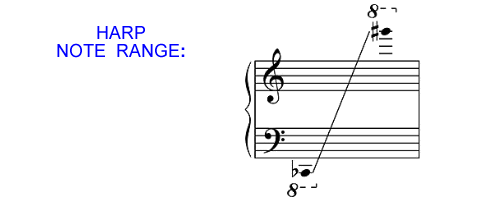
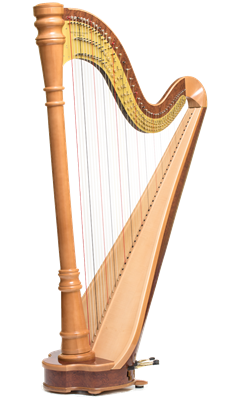
Harp - The harp is a stringed musical instrument that has individual strings running at an angle to its soundboard; the strings are plucked with the fingers. Harps can be played in either a seated or standing position. Most commonly, Harps are made of wood and are triangular in shape. Some have multiple rows of strings and pedal attachments while the Orchestra Harp has 47 strings and 7 pedals.
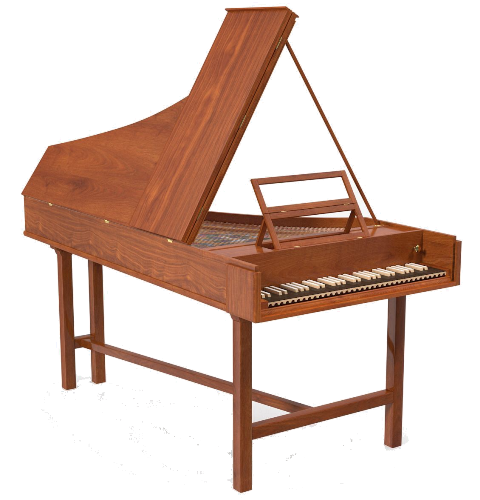
Harpsichord - The harpsichord is a keyboard instrument that makes its sound by plucking a set of strings. In a Harpsichord, depressing a key raises its back end within the instrument, which in turn lifts one or more jacks, each a thin strip of wood holding a small plectrum made from quill or plastic; each plectrum plucks a single string. The strings are under tension on a soundboard, which is mounted in a wooden case; the soundboard amplifies the vibrations from the strings so that the listeners can hear them.

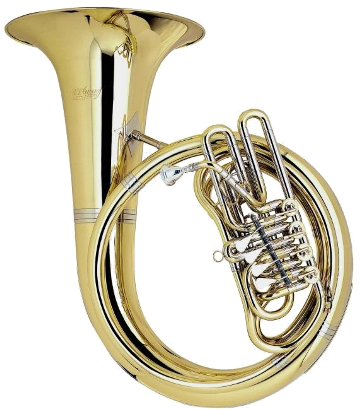
Helicon - The Helicon is a brass musical instrument in the tuba family. Most are Bb basses, but they are also built in Eb or F and occasionally in tenor or even smaller sizes. The Helicon has a wide, roughly-circular shape designed to be worn around the player's body, with the tubing wrapped under one arm and the bell resting on the opposite shoulder. Helicons were first used in the 1860's in cavalry and artillery mounted bands, then later used in military marching bands.
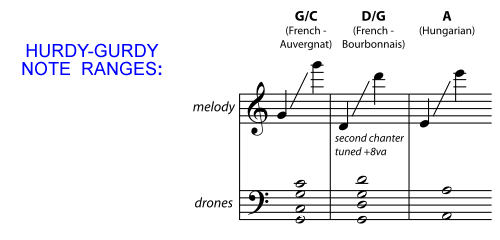
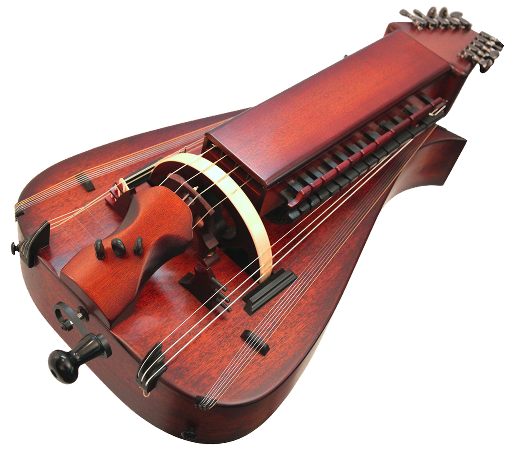
Hurdy-gurdy - The Hurdy-gurdy is a string instrument that produces sound by means of a hand-cranked rosined wheel which rubs against the strings. The wheel functions much like a violin (or nyckelharpa) bow, and single notes played on the instrument sound similar to those of a violin. Melodies are played on a keyboard that presses tangents—small wedges, typically made of wood or metal—against one or more of the strings to change their pitch. Like most other acoustic stringed instruments, it has a sound board and hollow cavity to make the vibration of the strings audible. Most hurdy-gurdies have multiple drone strings, which give a constant pitch accompaniment to the melody, resulting in a sound similar to that of bagpipes. For this reason, the hurdy-gurdy is often used interchangeably or along with bagpipes.
|





