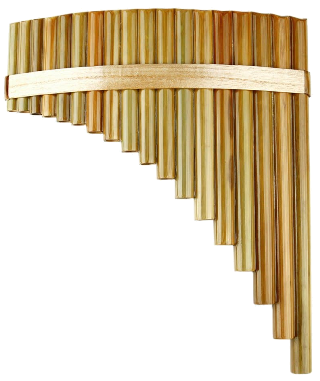
Pan Flute - The Pan Flute, also known as Panpipes or Syrinx, is a musical instrument based on the principle of the closed tube, consisting of multiple pipes of gradually increasing length. Multiple varieties of pan flutes have been popular as folk instruments. The pipes are typically made from bamboo, giant cane, or local reeds. Other materials include wood, plastic, metal, and clay.
Penny Whistle - The Penny Whistle, also known as the Tin Whistle whistle, is a simple 6-holed woodwind instrument. It is a type of fipple flute, a class of instrument which also includes the Recorder and Native American flute. A Pan or Tin whistle player is called a whistler. The Pan whistle is closely associated with Irish traditional music and Celtic music. Other names for the instrument are the flageolet, English flageolet, Scottish penny whistle, tin flageolet, or Irish whistle.

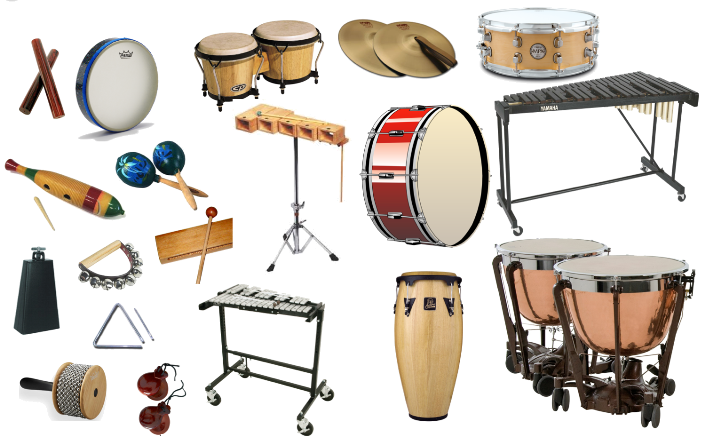
Percussion - A Percussion instrument is a musical instrument that is sounded by being struck or scraped by a beater including attached or enclosed beaters or rattles struck, scraped or rubbed by hand or struck against another similar instrument. The percussion section of an orchestra most commonly contains instruments such as the Timpani, Snare Drum, Bass Drum, Tambourine, belonging to the membranophones, and Cymbals and Triangle, which are idiophones.
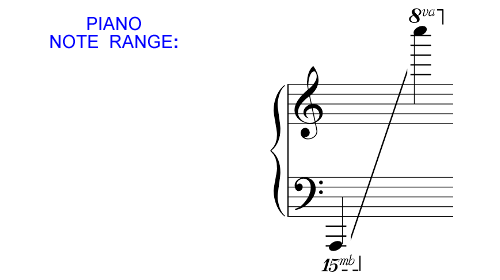
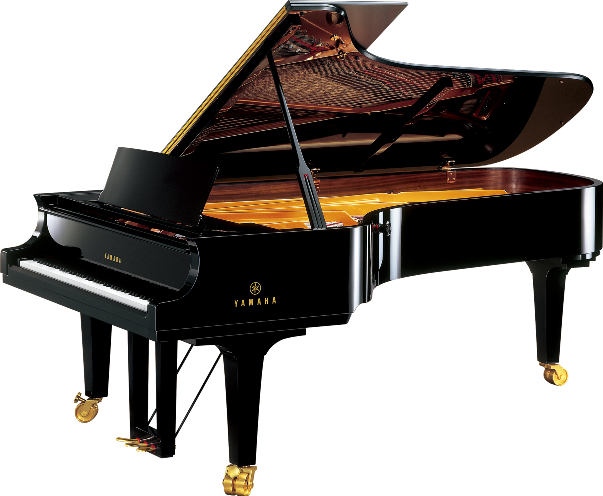
Piano - A Piano is a keyboard instrument that produces sound when its keys are depressed, activating an action mechanism where hammers strike strings. Modern pianos have a row of 88 black and white keys—with the exception of the Bosendörfer and Stuart & Sons pianos—and tuned to a chromatic scale in equal temperament. A musician who specializes in piano is called a pianist. There are two main types of piano, the Grand Piano and the Upright Piano shown below. The grand piano offers better sound and more precise key control, making it the preferred choice when space and budget allow. The grand piano is also considered a necessity in venues hosting skilled pianists. The upright piano is more commonly used because of its smaller size and lower cost.
When a Piano key is depressed, the strings inside are struck by felt-coated wooden hammers. The vibrations are transmitted through a bridge to a soundboard that amplifies the sound by coupling the acoustic energy to the air. When the key is released, a damper stops the string's vibration, ending the sound. Most notes have three strings, except for the bass, which graduates from one to two. Notes can be sustained when the keys are released by the use of pedals at the base of the instrument, which lift the dampers off the strings. The sustain pedal allows pianists to connect and overlay sound, and achieve expressive and colorful sonority.

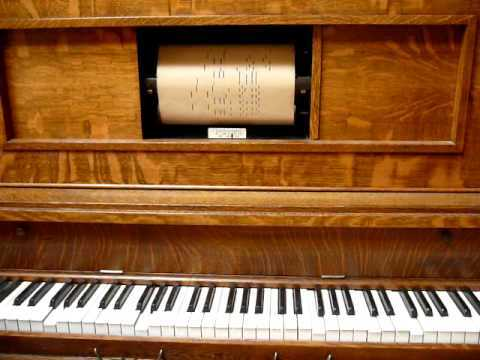
Player Piano - A Player Piano is a self-playing piano with a pneumatic or electromechanical mechanism that operates the piano action using perforated paper or metallic rolls. Modern versions use MIDI. The player piano gained popularity as mass-produced home pianos increased in the late 19th and early 20th centuries. Sales peaked in 1924 and subsequently declined with improvements in electrical phonograph recordings in the mid-1920's. The advent of electrical amplification in home music reproduction, brought by radios, contributed to a decline in popularity and the stock market crash of 1929 virtually wiped out production.
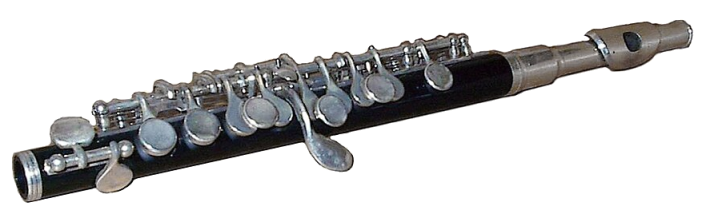
Piccolo - The Piccolo is a smaller version of the western concert Flute and a member of the woodwind family of musical instruments. Sometimes referred to as a "Baby Flute" or Piccolo Flute, the modern Piccolo has the same type of fingering as the standard Flute but the sound it produces is an octave higher. Piccolos are often orchestrated to double the Violins or the Flutes, adding sparkle and brilliance to the overall sound because of the aforementioned one-octave transposition upwards. The piccolo is a standard member in orchestras, marching bands, and wind ensembles.

|





